Spring, TX Weeknight Warriors: martial arts Condition 1 Combat Center
@jasperwfbz675
Weeknights in Spring move fast. Commute, dinner, homework, and then a split-second choice about what to do with the rest of the evening. For a growing group of locals, the answer ends up being the same: lace up, step onto the mats, and put in an honest hour at Condition 1 Combat Center. The mood in the building shifts around 6 p.m. Parking lot chatter turns into hand wraps and water bottles. Parents juggle drop offs, adults shake off office headspace, and kids buzz with nervous energy that soon finds useful direction.
Condition 1 Combat Center is not a big box gym or a boutique trend experiment. It is a focused training space built around martial arts and self defense, with weeknight classes paced for real life. The facility earns its reputation because the teaching is clean and consistent, and the culture holds people accountable without making them feel out of place. If you search for self defense classes on condition1combat.com, or scan for martial arts classes at Condition 1 Combat Center, what you see on the site lines up well with what happens on the floor. That honesty matters when you are carving out time after a long day.
What stands out when you walk in
Good schools look similar at a glance, but details separate the exceptional ones. At Condition 1 Combat Center, the mats are properly spaced and grippy without feeling harsh on falls. Pads are where you expect them to be, and the equipment is clearly cared for. Safety rules are posted, and the coaching team actually enforces them. You hear clear cues, not barked orders. New people get introduced around, and you notice that returning members remember names. That social threading is not accidental. It keeps training efficient and injury rates low because people communicate well under fatigue.
Instruction typically follows a progression: position before submission, structure before speed. In practice, that means the first part of class covers mechanics, then you add tension and movement, and only in the last block do you pressure test. Striking classes build from footwork into defensive layers before combinations, so you are not swinging while off balance. Grappling and clinch work start with frames, posture, and hip positioning. The result is a steady learning curve that carries students through plateaus without forcing them to relearn habits six months later.
Who trains here during the week
A Tuesday night line-up might include a CPA, an ER nurse on an every-other-weekend rotation, a high school wrestler off season, a college student with late labs, two parents who tag team childcare, and a deputy on his first day off. Mixed backgrounds make for better partners. The office worker brings attention to detail. The nurse stays calm when rounds get spicy. The teen brings pace. The parent knows how to manage stress under constraint. The deputy keeps the group honest about what holds up against resistance.
You see people at different stages of the journey. Brand new students stick to foundations and controlled drills, and coaches pair them with patient partners. Intermediate students start linking concepts across disciplines, maybe taking both striking and grappling in the same week to round out their skill set. Advanced students work scenarios, tighten timing, and pick up coaching responsibilities such as leading warm ups or helping newer members troubleshoot. That ladder of mentorship is how a school keeps its edge from Monday to Thursday.
Self defense that lives in the real world
Plenty of places advertise self defense classes. The meaningful distinction is how they train under stress. At Condition 1 Combat Center, the work is progressive and realistic without becoming reckless. Scenarios are specific: doorway confrontations, clinch control against a wall, verbal boundaries when someone crowds too close, exit strategies in low light. Drills build layers. You might start with posture and hand placement, then add a light grip from a partner, then a push, then a timed decision point. By the end of a cycle, you have made choices at a speed that looks a lot like everyday chaos.
When people look up self defense classes on condition1combat.com, they are often worried about two things. First, whether they can handle the intensity, and second, whether the content is relevant. Intensity comes in manageable steps. You can opt out of contact on day one and still leave with useful skills like boundary setting and stance management. Relevance shows up in the details. You are not taught to throw techniques that depend on perfect timing or gym-only conditions. You learn targets that make sense under adrenaline, how to break contact rather than chase a win, and how to solve for common grabs or strikes without needing a gymnast’s flexibility.

Kids who learn to love the work
Condition 1 Combat Center kids martial arts classes stay structured and upbeat, but they are not glorified babysitting. Coaches set expectations clearly: stand tall when someone speaks to you, look them in the eye, and say yes, coach or yes, ma’am. That tiny behavior shift does a lot for shy kids and high-energy kids alike. The first three to four weeks focus on movement patterns such as stance, pivoting, condition 1 combat center lateral steps, safe falls, and basic breakouts from wrist grabs or bear hugs. The point is not to create a miniature fighter. It is to build coordination, attention span, and practical boundaries.
Parents appreciate the way the room is organized. Kids sit on lines, pair up quickly, and reset without chaos. The rewards are specific and earned, not random candy for attendance. Little wins get recognized, but so does effort on rough days. When you check kids martial arts classes through condition1combat.com, you see that the schedule favors families with school-age routines, and the staff helps with logistics like reserving a trial class or fitting a uniform. The big picture benefit shows up after a couple months: better sleep, better appetite, homework done without a meltdown because the child has already burned off the fidgets on the mats.
Adults who need results without pretense
For the grown ups, adult martial arts training at Condition 1 Combat Center splits between striking, grappling, and mixed scenario work. A typical weeknight might offer a fundamentals striking class at 6 p.m. And a mixed-level grappling class at 7, which allows a working parent to catch one or stack both. You do not need to be an athlete to start. If you can walk briskly for 20 minutes, you can complete the warm up and stay engaged in drills. The first month is where you learn to pace. A decent rule of thumb is to train two to three nights per week for noticeable progress, with one of those nights focused on fundamentals.
Adults often ask how quickly they will get into shape. Expect meaningful cardiovascular improvements within six to eight weeks if you show up consistently, but do not fixate on the scale. A better metric is recovery time between rounds, the number of technical reps you can perform before your form falls apart, and your heart rate coming down within two minutes after a hard round. The adult martial arts training programs at Condition 1 Combat Center lean into that idea, using rounds, short intervals, and partner pacing to build real endurance and resilience.
When people search for adult martial arts training on condition1combat.com, they are often comparing it with generic fitness classes. The difference is purpose. Every drill has a direct reason. Hitting pads is fun, but you are also learning distance, timing, and how to cover exits. Grappling positional escapes are sweat heavy, but they translate directly to staying safe if someone pins you. Stronger hips, better bracing, and improved posture end up being side effects of learning effective movement under load.
How classes flow on a weeknight
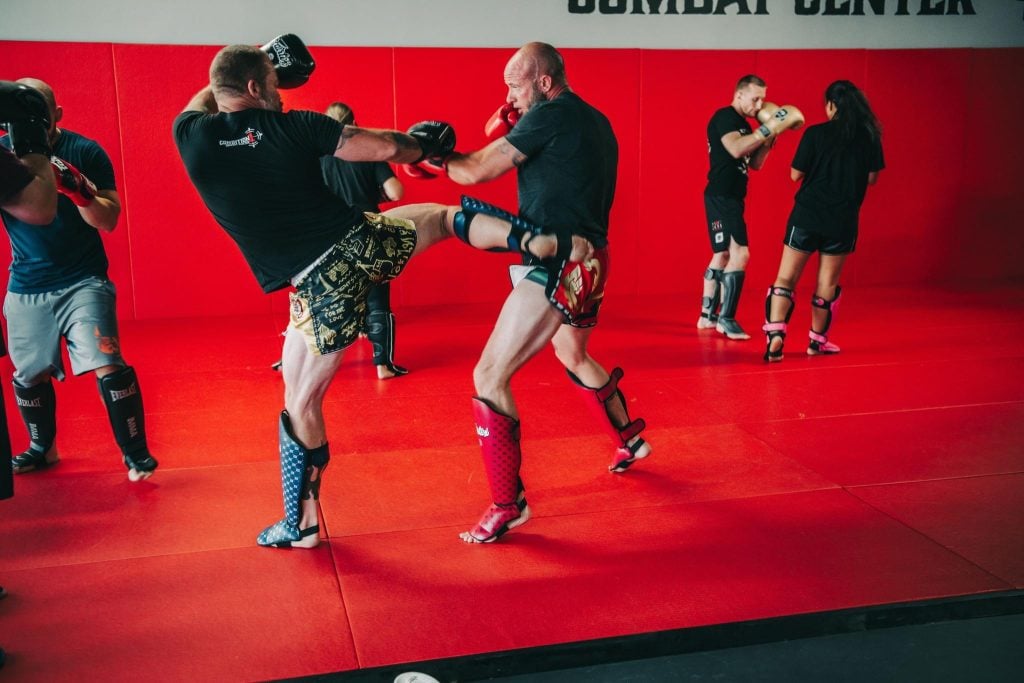
A Wednesday night story, start to finish. You pull into the lot and see a mix of SUVs and work trucks. Inside, kids are wrapping up their class, shaking hands, and doing a quick yes, coach before they line up to leave. The head coach calls the adults onto the mat for warm up. No burpee circus, just joint prep, footwork ladders, and breath work. If it is a striking night, the lesson might center on jabs off the lead step with defensive exits. Coaches demo, then you drill in short bursts. Corrections come quickly: lift the heel, chin tucked, quiet the shoulders, eyes up. You hear a pad crack from across the room when someone nails the timing, and the room energy goes up.
Next, controlled partner work. Maybe a light jab spar where one partner only throws, the other only defends and counters. Intensity is capped. Anyone out of rhythm steps off for a sip of water, watches a round, and gets back in. No one tries to win practice. If grappling is on, the core might be frames from bottom side control, building to a hip escape and a regard. Drills start with no resistance, then 30 percent, then a round of positional sparring where the top person tries to hold, the bottom escapes and regains guard. The hour ends on a short cooldown and a rundown of what to work on before the next class.
Progress you can see, not just feel
One of the most motivating parts of training at Condition 1 Combat Center is structured progression without a gimmick. You do not jump levels because you bought the uniform. Kids earn stripes or small markers for demonstrable skills, such as a technical stand up done cleanly five times in a row under light fatigue. Adults track competencies, for example, consistent guard recovery against a resisting partner, or landing a jab without leaning in and with a balanced exit three times in a round.
Sparring is optional and carefully supervised. You can develop timing and pressure tolerance in controlled formats without jumping into full contact. That is better for long-term health, especially for students with day jobs that do not allow black eyes. Injuries happen less often when ego stays off the mat and training partners respect limits. The coaching staff sets that tone. They will pull intensity back if it drifts, and they will remind you that self defense aims to end a confrontation quickly and leave, not rack up style points.
Practical tips for your first month
- Arrive 10 minutes early, introduce yourself to the coach, and ask where to stand for line up.
- Bring water, a small towel, and if you have them, a mouthguard and hand wraps for striking.
- Pace your effort at 70 percent for the first two weeks and focus on form.
- Log what you worked on after each class, three bullet points is enough.
- Plan rest days. Training two days on, one day off keeps progress steady.
These basics prevent most avoidable frustrations. You do not need expensive gear on day one. If you stick with it past the trial window, invest in hand wraps, a well fitted mouthguard, and sport-specific apparel that does not snag. For grappling, a rash guard and shorts with no pockets are standard. The staff can talk you through equipment that suits Condition 1 Combat Center martial arts classes without overbuying.
Choosing your lane without boxing yourself in
Condition 1 Combat Center martial arts training covers a spectrum: pure striking for those who like to move on their feet, grappling for those who prefer close contact problem solving, and blended sessions that simulate mixed situations. Beginners often start where their curiosity pulls them, then add a second discipline after four to six weeks. Cross training reveals blind spots. A striker who struggles when clinched learns to pummel and frame. A grappler who fears jabs learns to manage distance, parry, and exit.
There are trade-offs. Deep specialization builds sharp tools fast, but it may leave you exposed in a real altercation that shifts ranges unexpectedly. Cross training can slow early progress because your attention splits, but you develop better decision making. Coaches at the school help you weigh those choices based on your goals. If your priority is self defense, you will lean toward efficient tactics, positional awareness, and exit strategies. If you enjoy controlled competition, you might spend a cycle preparing for in-house sparring days with extra focus on cardio and tactics.
The kids side, seen up close
Parents want to know how kids handle nerves, rough days, and group discipline. The answer is practice. The first time a child must partner up with someone new, you might see hesitation. Coaches presort pairings with similar sizes and temperaments, and they float between groups to keep energy right. Correction is firm, never shaming. If a child shuts down mid-class, the protocol is to step aside, breathe, regroup, and rejoin with a scaled drill. Over a season, you see measurable changes. A child who used to shy away from eye contact starts answering up. A high-energy kid learns to hold still at line up. Those skills translate to the classroom as much as the mat.
Condition 1 Combat Center kids martial arts programs also teach anti-bullying strategies grounded in social reality. Kids practice assertive voice, strong stance, and how to get help. Physical responses are taught with restraint in mind, such as breaking a grip and creating distance rather than escalating. When parents search for kids martial arts on condition1combat.com, they often want to know if their child will be safe and supported. The answer, from what I have seen, is yes. Safety is enforced consistently, and if a pairing or drill is not working, the coach changes it quickly.
Managing time and energy on work nights
Committing to night classes is less about motivation and more about building a repeatable routine. Successful members treat class like a meeting with a client. It is on the calendar, and they prepare for it. Meal timing matters. Training on a full stomach feels awful, but arriving hungry is no better. A small meal 60 to 90 minutes before class lands well for most people, something like lean protein and a simple carb. Hydration starts at lunch, not when you pull into the parking lot. Families with kids double up by setting schoolwork right after school, dinner early, then class, then a light snack and bed.
Expect a normal fatigue curve. Week one is a novelty bump. Weeks two and three feel tougher because your body is adapting. By week four, your joints and lungs start to catch up. If you have not exercised in a while, your shins and hips may ache a bit. That is typical. Scale volume, communicate with your coach, and avoid playing hero. Progress that lasts comes from consistency at moderate intensity rather than sporadic all-out nights.
What results look like over time
Results vary, but trends are clear. Within a month, you move better, and your balance improves. Within two to three months, high heart rates feel less scary and you recover faster between rounds. Within four to six months, your technique under light pressure looks organized. You do not drop your hands after throwing, you keep your base when someone pushes or pulls, and you find the exit without turning your back prematurely. Mentally, you get comfortable with controlled discomfort, which carries over into work and family life. That confidence does not come from tough talk, it comes from getting through hard rounds cleanly and showing up again.
Community builds on top of that. You end up with training partners who text if you miss a night. Kids make friends who share values around respect and effort. Those social bonds help past the six month mark, when the initial novelty fades and you need a deeper reason to keep improving. Schools that thrive long term, like Condition 1 Combat Center, cultivate that mix of standards and support on purpose.
The difference good coaching makes
Coaching is more than calling combinations or counting reps. It is timing feedback so that it lands without overwhelming the student, spotting small faults early so they do not calcify, and knowing when to push and when to pull back. At Condition 1 Combat Center, cues are specific. Instead of fix your stance, you might hear lead foot points forward, heel light, weight centered. Instead of harder, the cue might be lock your wrist and snap on two. Those details help adults and kids internalize movement in a repeatable way.

A strong program also guards against common pitfalls. Overreliance on memorized sequences fades under pressure. Good coaches switch the variables. They change angles, distance, or timing so that the student must apply principles rather than parrot choreography. In grappling, that might mean starting from a bad position and working toward a frame and hip shift before thinking about a sweep. In striking, that could mean learning to reset after a miss instead of chasing a target. The outcome is adaptable skill, not a highlight reel that falls apart the first time a partner does something unscripted.
Trying a class without pressure
If you are on the fence, visit the school, watch a class for 15 minutes, and talk to the front desk about a trial. The staff is used to first timers, and the culture supports curious visitors. Bring questions that matter to you. If you want self defense with minimal contact, ask how they handle that. If you care about competition, ask when sparring is offered and how it is supervised. Pick a weeknight that fits your schedule, then commit to showing up for at least four sessions. One class tells you if the vibe is right. Four classes tell you if the routine can stick.
You can check current options for martial arts classes on condition1combat.com. The schedule shifts seasonally, especially around holidays and school calendars, so rely on the posted information rather than a screenshot from last month. If you are planning for a child, ask about class sizes and age groups. For adults, ask whether you need to reserve a spot for popular time slots.
Final pointers for steady progress
- Keep your ego low and your questions clear. Coaches can fix almost anything if you tell them what you are feeling.
- Anchor your week with training days you protect, even when motivation dips.
- Film a rep or two occasionally with permission and review your form. Small visual feedback accelerates learning.
Spring evenings will always be busy. The trick is to spend that hour in a place that pays you back. Condition 1 Combat Center martial arts programs do that by delivering technical skill, fitness you can measure, and a community that learns to push without breaking. Whether you are searching for self defense classes, kids martial arts, or adult martial arts training on condition1combat.com, the path forward is the same. Step through the door, stake your spot on the mat, and make the next rep better than the last one.